
The Fast and the Furious: Tokyo Drift – An Iconic Drifting Revolution
1. Introduction
Released in 2006, The Fast and the Furious: Tokyo Drift – An Iconic Drifting Revolution introduced millions worldwide to the raw thrill of sideways action. Unlike its predecessors’ muscle-car street races, this third installment dove headfirst into drift culture—a style of racing born in the mountain passes of Japan, where drivers intentionally oversteer to slide their cars in controlled, high-speed skids.
At its core, Tokyo Drift is a coming-of-age tale, following American teenager Sean Boswell as he’s shipped off to live with his father in Tokyo to avoid juvenile detention. There, Sean discovers underground drift competitions run by local legends like the Drift King (D.K.), and finds mentorship in a laid-back import tuner named Han Lue. Along the neon-lit streets of Shibuya and the winding curves of Mount Fuji’s outskirts, the film weaves a story of rebellion, redemption, and a subculture that prizes style as much as speed.
What truly set this movie apart was its authenticity. Real-life drift pros—most notably Keiichi Tsuchiya, known as the “Drift King,” and New Zealand’s Rhys Millen—guided the choreography and even made cameo appearances, lending street-cred to every donut and drift entry. The film’s emphasis on tuner builds, high-performance swaps, and right-hand-drive imports inspired a generation of gearheads to tune, modify, and slide their own rides.
Though Tokyo Drift didn’t top the box office at first, its cult status soared once home video and international markets embraced its unique style. It’s now celebrated as a pivotal moment in motorsports cinema—one that turned drift from niche to mainstream, and reshaped the entire Fast & Furious franchise for years to come.
2. Cultural Impact: Drifting Culture Goes Global
Long before drift cars became a fixture at car shows and video games, the sport lived in the shadows of Japan’s mountain roads. Tokyo Drift served as the catalyst that thrust this underground movement into the global limelight, fueling interest from Tokyo to Tijuana.
2.1. Origins and Evolution of Drifting in Japan
Drifting’s roots trace back to the late 1970s and ’80s in the winding roads of Gunma Prefecture. Pioneered by street racers seeking an edge—and a spectacle—drivers discovered that a perfectly timed throttle lift and clutch kick could send a rear-wheel-drive car into a graceful slide. Underground gatherings soon formed, with tuners modifying engine outputs and suspensions to master controlled oversteer.
By the early 2000s, drifting had already spawned professional competitions such as the D1 Grand Prix, turning a rogue pastime into a full-blown motorsport. Films like Drift (1998) and documentaries chronicled the scene, but it was The Fast and the Furious: Tokyo Drift – An Iconic Drifting Revolution that brought these techniques to Hollywood. Its depiction of smoky tires and razor-sharp turn-in points introduced casual viewers to the fine art of tire chirp and drift angle.
2.2. Mainstreaming Underground Racing
Thanks to its vivid storytelling and spectacular chase sequences, Tokyo Drift did more than entertain—it educated. Suddenly, car magazines featured drift tutorials, brands like HKS and VeilSide saw spikes in parts orders, and import-tuner gatherings worldwide began staging drift demos. The film’s influence rippled through:
-
Video Games: Titles like Need for Speed: Underground 2 and Forza Horizon incorporated drift modes, letting players emulate on-screen stunts.
-
Aftermarket Culture: Tuners in North America and Europe started converting Nissan Silvias and Mazdas to right-hand drive or adapting left-hand models for drift setups.
-
Social Media: Early online forums and later Instagram and YouTube channels exploded with DIY drift tutorials, build diaries, and event coverage.
By spotlighting a once-hidden motorsport, Tokyo Drift transformed drifting from a fringe hobby into a global phenomenon—one where style, skill, and showmanship reign supreme. For a deep dive into the sport’s evolution, see Drifting (motorsport) on Wikipedia.
3. Characters in the Fast Lane: Plot and Personalities
At its heart, The Fast and the Furious: Tokyo Drift – An Iconic Drifting Revolution is driven by its characters. Each racer brings a unique flavor, reflecting the mash-up of cultures and techniques that define drift.
3.1. Sean Boswell’s Tuner Transformation
Sean Boswell, played by Lucas Black, arrives in Tokyo as the ultimate outsider—an American car-enthusiast with more heart than skill. After a disastrous street race, he’s introduced to the world of drift by Twinkie (Bow Wow), who raves about the “art” of sliding sideways. Under Twinkie’s rag-and-bone tutelage, Sean learns the basics of car control, but it’s Han Lue who refines his technique.
Sean’s signature ride—initially a beaten-up Nissan Silvia S15 dubbed “Mona Lisa”—undergoes an RB26DETT engine swap, coilover suspension, and custom aero. This visual transformation mirrors his personal journey: from hot-headed risk-taker to disciplined drifter who values patience, car balance, and the respect of his peers.
3.2. Han Lue: The Drift Mentor's Legacy
Sung Kang’s Han Lue stole every scene with his effortless charisma and masterful drifting. More than just comic relief, Han embodies the soul of the tuner scene: laid-back yet intensely focused when behind the wheel. His VeilSide-kit Mazda RX-7 FD3S, bathed in vibrant orange, remains one of the franchise’s most iconic cars.
Off-screen, Han’s bond with Sean represents a passing of the torch. He shares insider tips—like the clutch-kick to initiate a drift or weight-transfer techniques for mid-corner corrections—while stressing the importance of flow and rhythm. Han’s tragic fate in later films only deepened his mythos, making every drift clip a homage to his legacy.
4. Car Icons: Legendary Rides and Tuner Builds
The soul of The Fast and the Furious: Tokyo Drift – An Iconic Drifting Revolution lives in its garage of characters—200+ cars that range from purpose-built drifters to raw American muscle. Each machine tells a story of craftsmanship, horsepower swaps, and the tuner ethos that defined an era.
4.1. Nissan Silvia S15 “Mona Lisa”
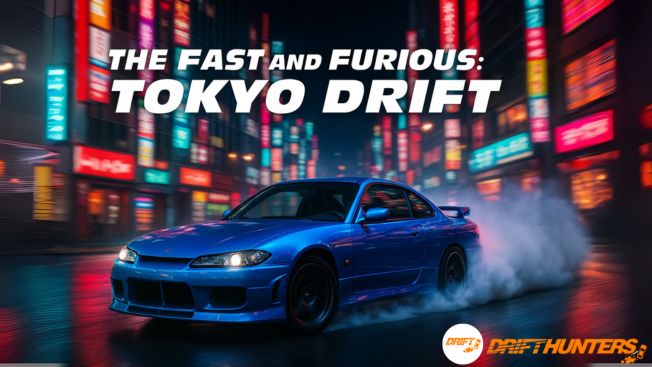
The Nissan Silvia S15 “Mona Lisa” is arguably the film’s most celebrated ride. Under Sean Boswell’s tentative control, this arctic-white import becomes a canvas for extreme modification:
-
Engine: Originally powered by the SR20DE, the production “Mona Lisa” received an RB26DETT straight-six transplant. This iconic Skyline engine brings twin-turbo boost and a broad torque curve ideal for controlled slides.
-
Chassis & Suspension: To handle the extra power, the Silvia’s unibody was reinforced with a roll cage and upgraded strut braces. Adjustable coilovers and widened trailing arms gave Sean the agility and camber to hold drift angles through Tokyo’s tight corners.
-
Aero & Wheels: A C-West body kit not only enhanced downforce but also widened the track for greater stability. Volk Racing GT-7 wheels shod in semi-slick tires completed the aggressive stance.
-
Cultural Impact: Though “Mona Lisa” meets its end in a garage collision, the Silvia’s brief tenure sparked countless real-world builds. Enthusiasts worldwide attempted the RB26 swap, chasing the same blend of Japanese precision and raw power that defined the film’s aesthetic.
Beyond specs, “Mona Lisa” symbolized Sean’s metamorphosis—from reckless drag-racer to disciplined drifter focused on line, angle, and tire smoke.
4.2. VeilSide Mazda RX-7 FD3S and American Muscle Mix in The Fast and the Furious: Tokyo Drift – An Iconic Drifting Revolution
No car captures the film’s fusion of style and spectacle like Han’s VeilSide RX-7 FD3S. Bathed in matte orange, it embodies the Japanese art of drift with aerodynamic flair:
-
Engine & Powertrain: The FD3S chassis houses an HKS T04Z-equipped 13B-REW rotary, tuned for instant throttle response. A high-flow exhaust and standalone ECU ensure pinpoint control when entries demand half-throttle and feathered brakes.
-
VeilSide Fortune Kit: Unlike factory flares, VeilSide’s widebody adds dramatic overarches and deep side skirts, maximizing airflow to the front-mounted intercooler.
-
Signature Elements: Han’s car rolls on 18-inch Volk TE37 replicas, wrapped in 265/35-18 rubber. Purple under-glow and carbon-fiber mirrors underscore his “cool under pressure” persona.
-
American Muscle Contrasts: The film juxtaposes this precision import with Sean’s battered 1971 Chevrolet Monte Carlo and later, the Mustang Fastback. These big-block beasts—rigged for drag more than drift—highlight the chasm between straight-line power and sideways finesse.
By weaving these diverse machines into a single narrative, The Fast and the Furious: Tokyo Drift – An Iconic Drifting Revolution showcased how build philosophy shapes driving style, elevating cars to co-stars in every scene.
5. Behind the Scenes: Authenticity and Cinematic Flair
While on-screen thrills make Tokyo Drift a fan favorite, it’s the off-screen dedication to realism and style that cemented its legacy. The production team blended documentary-style chasing with Hollywood spectacle to deliver both authenticity and adrenaline.
5.1. Collaborations with Real Drift Pros
To capture genuine drift technique, director Justin Lin enlisted pioneers of the sport:
-
Keiichi “Drift King” Tsuchiya: Credited with popularizing drifting in the 1980s, Tsuchiya coached actors on heel-toe shifts and weight transfer. He also drove several key chase scenes, ensuring tire-smoking entries and exits looked authentic.
-
Rhys Millen: This New Zealand drifter doubled for Sung Kang in some of Han’s most daring manji and 360-spin stunts. Millen’s expertise with a hand-brake initiation lent credibility to the film’s extreme angles—techniques rarely seen in mainstream cinema.
-
Stunt Coordination: The team adapted actual D1 Grand Prix choreography, mapping out courses on Shibuya’s streets and mountain passes. Multiple skid pads were rigged with high-speed cameras to capture every tire flick in slow motion.
By marrying professional guidance with custom-built drift rigs, the filmmakers achieved a balance: the cars moved with real technical precision while still serving narrative beats.
5.2. Driving Beats: The Impactful Soundtrack of The Fast and the Furious: Tokyo Drift – An Iconic Drifting Revolution
No drift scene feels complete without an ear-worm beat. The film’s soundtrack—an eclectic blend of Japanese hip-hop, EDM, and West Coast rap—became as iconic as its cars:
-
Teriyaki Boyz – “Tokyo Drift (Fast & Furious)”: This track’s catchy chorus and throbbing bassline instantly signal a high-stakes race through neon cityscapes. Its global popularity helped introduce Japanese artists to Western audiences.
-
Grits – “My Life Be Like”: Underscoring Sean’s training montages, this soulful hip-hop anthem bridges cultures, reflecting his transition from outsider to accepted drifter.
-
Brian Tyler Score: Composer Brian Tyler wove in traditional Japanese percussion with orchestral stings, heightening tension during the final showdown on Mt. Fuji.
The result is a soundtrack that doesn’t merely accompany visuals but drives them—much like the cars themselves—fueling the film’s cultural resonance long after the credits roll.
6. FAQs
Q1: What is the orange car in The Fast and the Furious: Tokyo Drift?
A1: The vibrant orange ride belongs to Han Lue—a VeilSide-modified Mazda RX-7 FD3S equipped with an HKS-tuned 13B-REW rotary engine and widebody aero kit.
Q2: What makes drifting different from other motorsports?
A2: Unlike point-to-point drag races, drifting emphasizes controlled oversteer, where drivers maintain a slide through corners using throttle control, clutch kicks, and hand-brake inputs while preserving speed and style.
Q3: When was The Fast and the Furious: Tokyo Drift released?
A3: The film premiered on June 16, 2006, in North America before rolling out internationally.
Q4: Which real drift legends appear in the movie?
A4: Keiichi Tsuchiya (“Drift King”) and Rhys Millen both make cameo appearances and served as technical consultants for the drift sequences.
Q5: How many cars were used during filming?
A5: Over 200 cars were prepared—ranging from multiple Nissan Silvias and Fairlady Zs to rare imports like the Toyota Chaser—though not all appear in the final cut.
Q6: Is the soundtrack available separately?
A6: Yes, The Fast and the Furious: Tokyo Drift Original Motion Picture Soundtrack was released alongside the film and features tracks by Teriyaki Boyz, Grits, and others.
7. Conclusion: The Drift Revolution Lives On
The Fast and the Furious: Tokyo Drift – An Iconic Drifting Revolution did more than kick up tire smoke—it opened the door for an entire culture to shift into the mainstream. By spotlighting meticulous car builds like the Silvia S15 “Mona Lisa” and Han’s VeilSide RX-7 FD3S, and by collaborating with drift legends for authentic on-screen action, the film created a blueprint for motorsport cinema.
Over a decade later, the influence of Tokyo Drift can be felt across video games, aftermarket tuning, and global drift competitions. Its legacy proves that when you blend heart, horsepower, and culture, you get more than a movie—you spark a revolution. So plug in that soundtrack, find a drift-friendly mountain pass (or sim), and remember: sideways is the fastest way forward.